
Local SEO for Cleaning Companies: A Complete Guide For It
How Local SEO Helps Customers Find Your Cleaning Company. Local SEO for cleaning companies helps people find and evaluate a cleaning business when they search for services nearby. It connects information about the company’s services, coverage and reputation across Google Search,...
- Oct 26, 2026
- 9 min read
By Asif Shaik
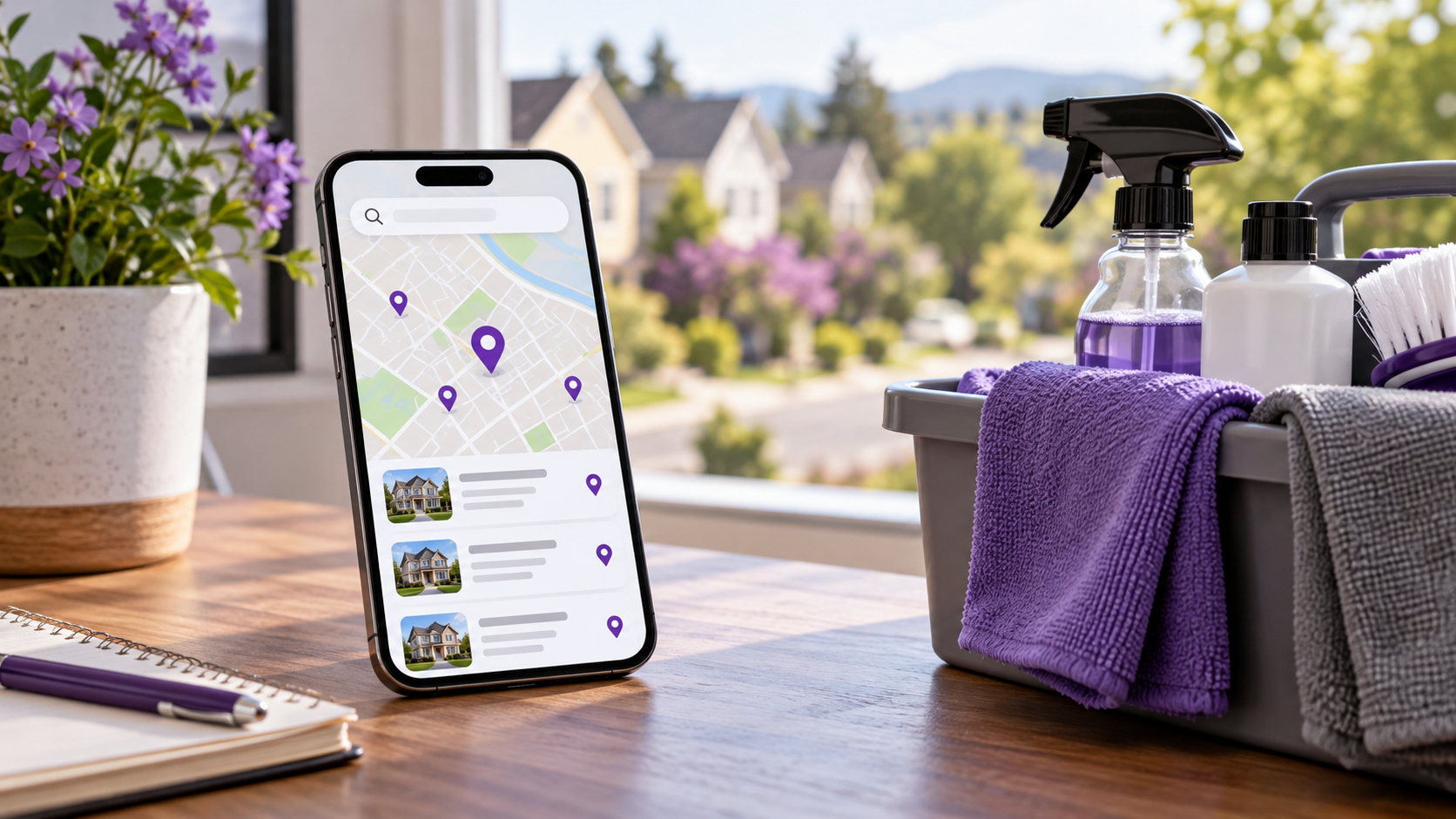
How Local SEO Helps Customers Find Your Cleaning Company.
Local SEO for cleaning companies helps people find and evaluate a cleaning business when they search for services nearby. It connects information about the company’s services, coverage and reputation across Google Search, Maps and its website.
Customers need to know whether you serve their address, offer the cleaning they require and accept the type of work they need. Accurate information helps them decide whether to contact you.
However, serving an area and appearing in its search results are different things. A cleaning company may work across several towns without appearing equally in all of them.
What Customers Want to Know Before Contacting a Cleaner
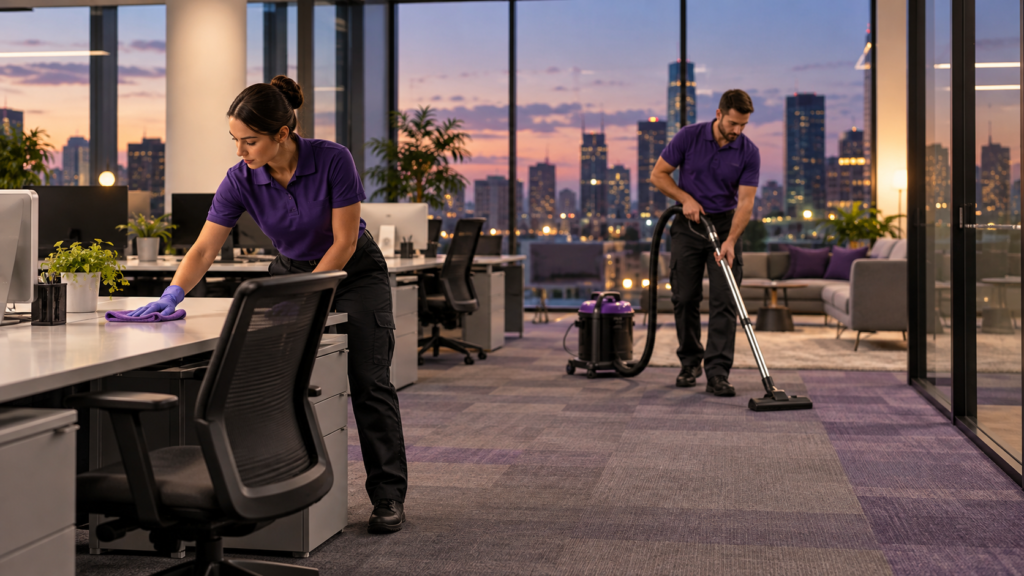
Cleaning searches often combine a service requirement with a location. The information customers need depends on their property and the work involved.
Someone looking for recurring house cleaning may want to understand visit frequency, included tasks and whether cleaning supplies are provided.
A tenant arranging a move-out clean may need information about exclusions, property condition and availability before a handover date.
An office manager may need an ongoing cleaning contract, an agreed schedule and a walkthrough before receiving a proposal.
These are separate needs, even when one company provides all three services. A broad description of “cleaning services” may leave customers unsure whether the business is suitable.
Local search connects people with possible providers. The information they find then helps them assess the fit.
Where Cleaning Companies Appear in Local Search
Google Maps and the Local Pack
The local pack is a group of business listings that Google may display for searches with local intent. Customers can use these listings to compare companies, read reviews, call or visit a website.
Google Business Profile supplies information used in these listings, including business details, categories, services and customer reviews.
Google describes local ranking in terms of relevance, distance and popularity. Visibility can therefore vary according to the search phrase, the searcher’s location and the businesses nearby.
A town appearing in a company’s service-area settings does not guarantee a prominent position in that town’s Maps results.
Organic Website Results
Organic results can display pages from a cleaning company’s website, including pages about individual services and geographic coverage.
These pages provide more room to explain what the work includes, its limitations and the enquiry process.
Maps visibility and organic website visibility are related but distinct. A website page may appear for a location search even when the company is less visible in that location’s local pack.
Bixeltek’s local SEO services address how business listings, website information and local search visibility relate to one another.
Which Cleaning Companies Qualify for Google Business Profile?
Businesses That Travel to Customers
A cleaning company that visits customers at their properties can generally qualify as a service-area business. This can include a business operated from the owner’s home.
Where customers are not served at the business address, Google requires that address to be hidden from public display.
Hiding the address does not change the company’s actual location. The underlying business information still needs to reflect where it operates.
Businesses With Customer-Facing Premises
A company that receives customers at its premises and also travels to properties may qualify as a hybrid business.
An address displayed on the profile must represent an eligible customer-facing location that meets Google’s requirements. A rented mailing address alone does not establish an eligible branch.
Businesses With Several Operating Locations
Serving several towns is different from operating several branches.
Separate profiles require genuinely separate, eligible operating locations with separate staff and service areas. A town does not become a branch simply because the company accepts cleaning jobs there.
This distinction helps customers understand whether they are viewing a physical business location or an area served by a travelling team.
What a Service Area Actually Represents
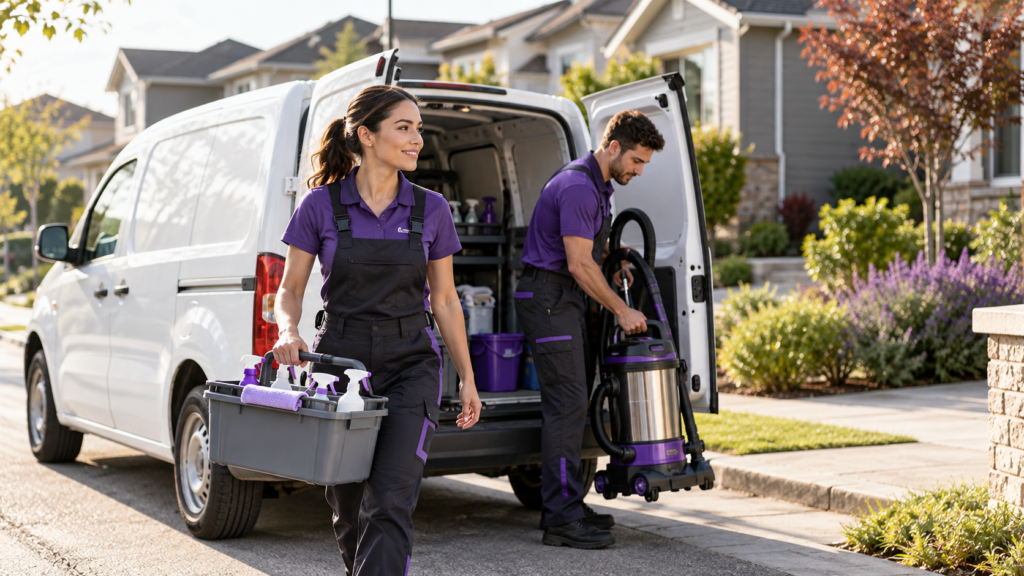
A service area describes where a cleaning company travels to carry out its work.
Google currently allows up to 20 service areas, using cities, postal codes or other supported areas. Its general guidance is that the overall boundary should be within about two hours’ driving time of the business base, although exceptions can apply.
That is a profile guideline. It does not mean every cleaning company can practically accept work across that distance.
Actual coverage depends on staffing, travel time, job size and service type. A company might provide commercial cleaning across a wider region while limiting recurring house-cleaning visits to nearby neighbourhoods.
Availability can also differ within one town. Larger one-time jobs may be available there, while weekly residential visits are not.
A service-area description communicates operational coverage. It does not establish a physical presence in every named location or guarantee search visibility throughout that coverage.
How Categories and Service Listings Describe the Business
A Google Business Profile category describes the type of business. The services section explains the individual work it offers.
A residential cleaning company may have an appropriate house-cleaning category available. A commercial operator may have a category that more accurately reflects its main activity.
Category names and availability can vary by market. Examples found in an article may not match the options available in every profile.
Additional categories describe other genuine aspects of the business. They do not replace the services section, which explains individual offerings. A specialist cleaning service may also have a relevant category when it accurately describes the business.
The business-name field represents the company’s real-world name. Extra service or location keywords added solely for search visibility do not become legitimate parts of that name.
What Different Pages on a Cleaning Website Explain
Service Pages Explain the Work
A service page helps customers understand a particular cleaning service and assess whether it suits their requirements.
For deep cleaning, this may include the tasks covered, exclusions, property-condition considerations and how estimates are prepared.
For commercial cleaning, relevant information may include facility types, working arrangements and the walkthrough or proposal process.
Different phrases do not always represent different services. “House cleaners” and “house-cleaning services,” for example, may describe the same customer need and be addressed on one page.
Area Pages Explain Local Availability
An area page explains the company’s services in a particular location.
Useful information can include the services available there, coverage restrictions, travel charges and genuine examples of completed work.
The existence of an area page does not establish a branch. Its wording should accurately distinguish a place the company serves from premises it operates.
Pages that differ only by town name provide little additional information. Large sets of substantially similar pages created to capture similar searches can also raise doorway-abuse concerns under Google’s spam policies.
Contact and Quote Pages Handle Enquiries

Contact and quote pages connect customer interest with the business.
Their purpose extends beyond displaying a phone number or form. Customers need to understand what information is required, whether their property falls within coverage and what happens after they submit a request.
A confirmation message does not, by itself, prove that the enquiry reached the business. Website functionality and enquiry delivery are separate parts of the process.
Bixeltek’s professional web design services cover website structure and the customer journey, including how visitors understand services and complete enquiries.
What Reviews Tell Potential Customers

Reviews provide information about genuine customer experiences. They may describe communication, punctuality, the cleaning completed or how the company responded to a concern.
Google prohibits incentives such as discounts or free services in exchange for reviews. Its policies also prohibit selectively soliciting positive reviews while discouraging negative feedback.
A review reflects the customer’s account of their experience. Pressure to provide a particular rating or include prescribed wording undermines that independence.
Public replies can also reveal private information unintentionally. Details about a customer’s address, home access or contract arrangements do not belong in a review response.
Reviews can contribute to trust and local visibility. However, a particular review count or rating does not guarantee a ranking.
Why Search Activity, Enquiries and Bookings Are Different
Search reports and business records describe different stages of customer activity.
Google Search Console reports website visibility and clicks from search. Google Business Profile Performance reports interactions with the business listing. Google Analytics 4 records configured website events.
None of these automatically provides a complete record of suitable cleaning work.
Clicks Do Not Confirm Completed Enquiries
A search impression means a result appeared. A website visit means someone reached a page. Neither confirms that the visitor needed the service.
The “Calls” metric in Google Business Profile counts call-button clicks rather than confirmed conversations. Similarly, a form-start event does not establish that an enquiry was completed.
A completed enquiry is a further step, but it may still concern an address outside coverage or a service the company does not offer.
Qualified Enquiries Are Different From Booked Work
An enquiry becomes qualified when it meets the company’s actual criteria, such as service type, location and job scope.
Scheduling remains a separate consideration. An unavailable requested date does not necessarily make the customer unsuitable if an alternative is acceptable.
A booking or signed contract is a further outcome. It does not follow automatically from qualification, particularly where commercial work involves a walkthrough and proposal.
Reporting Differences Do Not Always Mean Lost Demand
An enquiry may reach the business without appearing in analytics. Alternatively, a website problem may prevent the enquiry from being delivered at all.
Reporting delays, time-zone differences and date definitions can also affect totals. Enquiries received this month and jobs booked this month may concern different customers.
Hypothetical example: A cleaning company’s form rejects a valid postcode within its coverage area. This is a website failure because the request cannot be completed. If the request reaches the business but its analytics event is missing, the issue is measurement instead. The distinction shows whether the customer journey failed or only the reporting did.
When a Local SEO Review Can Help
Conflicting information across a cleaning company’s profile, website and enquiry records can make the underlying issue difficult to identify.
Bixeltek can review profile accuracy, service and area pages, and the enquiry journey to help establish where those inconsistencies occur.