
Arabic or English Website for a Saudi Business? What to Use.
Does Your Saudi Business Need an Arabic Website, an English Website, or Both? Launch in Arabic if your main customers prefer to read about your offer and contact you in Arabic. Start in English if your primary buyers use English to...
- Nov 17, 2026
- 8 min read
By Asif Shaik
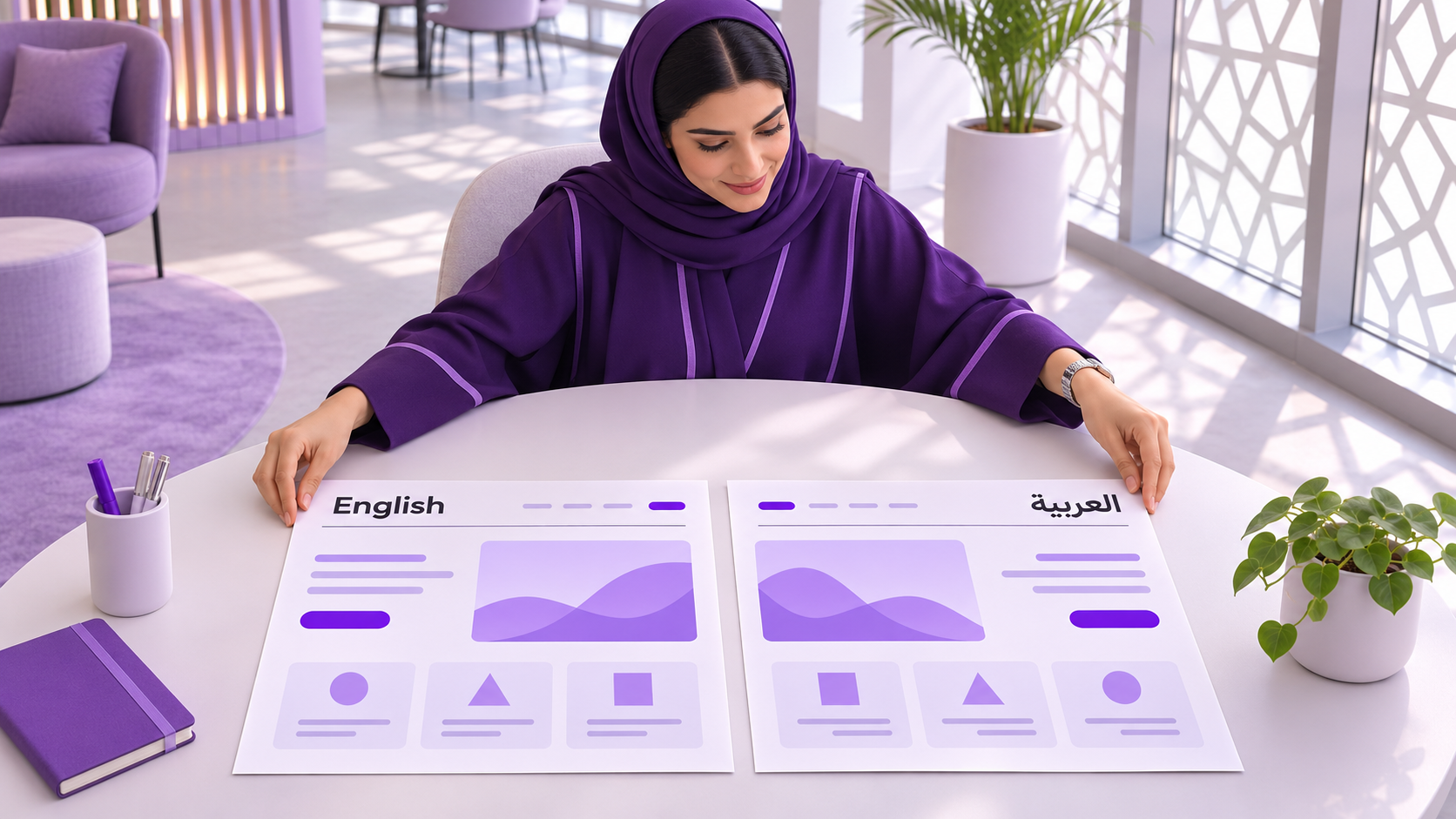
Does Your Saudi Business Need an Arabic Website, an English Website, or Both?
Launch in Arabic if your main customers prefer to read about your offer and contact you in Arabic. Start in English if your primary buyers use English to evaluate suppliers and make enquiries. Launch in both when two groups need different languages to make a decision and both need to use the website from day one.
Base the choice on what customers need to do. A homeowner may want to check whether you serve their neighbourhood and request a visit. An overseas buyer may need product specifications before sharing your website with colleagues. Follow each customer’s decision from the first page they see to their next step.
When to choose an Arabic or English website for a Saudi business
An Arabic-first or English-first website launches with one main language. A bilingual website gives both audiences a way to understand the offer and act in their preferred language. The two versions can emphasise different information when customers have different needs.
The following examples are hypothetical.
| Business | What buyers need | Language to launch with |
|---|---|---|
| Home air-conditioning service in Riyadh | Local households ask in Arabic about neighbourhood coverage, call-out hours and appointment availability. | Arabic-first. Explain which areas you serve and how to request a visit. |
| Industrial pump supplier in Dammam | Maintenance teams discuss applications in Arabic. Procurement teams compare model numbers and technical specifications in English. | Both. Explain equipment applications and service coverage in Arabic, make English datasheets easy to find, and collect operating requirements from either group. |
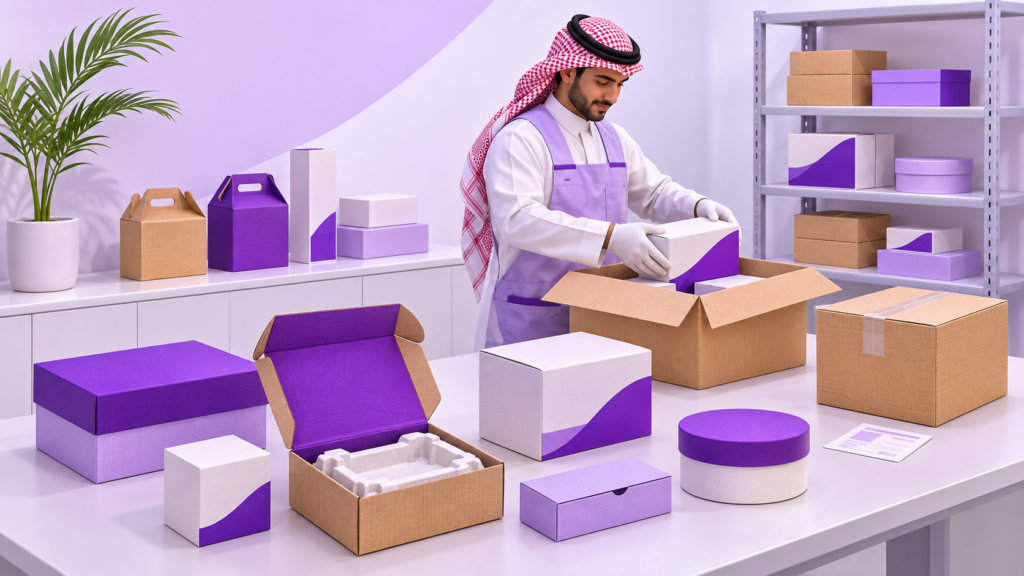
| Packaging manufacturer selling to overseas distributors | International buyers use English to assess production capabilities, order quantities and export markets. | English-first. Give distributors enough detail to decide whether the manufacturer can supply them. |
For a business selling technical products through several decision-makers, Bixeltek’s web design services in Saudi Arabia’s Eastern Province can help plan how buyers find the catalogue, access product information and reach the right team.
Why the language choice matters to customers
Customers use your website to rule options in or out. If a relevant detail is available in the language they use, they can decide whether a service fits before contacting you. Your team can then spend the first conversation confirming the job or discussing requirements, with fewer basic questions left to answer.
A second language can also help customers prepare for an enquiry. A business customer who can read what a service includes can gather the details your team will need before making contact. A household customer who understands what a visit involves can arrange access or ask a more specific question. Clear information makes the next conversation easier for both sides.
Look for benefits you can observe after launch. If customers previously asked your team to explain a service page in another language, check whether those requests become less frequent. Ask sales staff whether enquiries from that audience now include enough detail to respond. A visit to the translated page shows that someone reached it. The questions and details they share tell you more about whether the page helped them.

When to add a second language
Add a second language when a customer group you want to reach repeatedly needs help understanding the offer or completing an enquiry. Review recent calls, emails and messages. Note the language customers use and where they get stuck. An Arabic-only training provider might hear from human resources teams asking in English whether courses can be delivered at their offices. If those teams are a sales priority, an English page about on-site training addresses a specific gap.
If you already have a site, open the Search results performance report in Google Search Console, filter the country to Saudi Arabia and review the Queries tab. Look for Arabic and English searches related to the services or products you want to sell. The report reflects searches where your current pages appeared. An English-only site may show few Arabic queries even if Arabic-speaking buyers exist, so compare the report with what customers ask your team.
For a first website, ask prospective customers how they found a similar business the last time they needed one. Find out what they searched for, which language they used to compare options and what they wanted to know before reaching out. Use those answers to decide what to publish at launch.
Where to offer each language on the website
Start with the page each customer is most likely to visit and follow the route to an enquiry. A buyer may land on a product page from a search result or open a service page shared by a colleague. If the second language is available only on the homepage, people entering elsewhere may miss it.
Choose a set of pages that lets the second audience complete a useful task. For a product enquiry, connect the relevant product range to its specifications and the form that reaches your sales team. Give visitors a way to reach the corresponding page when both versions exist. If a matching page is unavailable, link to related content in the selected language.
When the same offer serves buyers in different markets, put the market details beside the offer itself. For example, a manufacturer can list the areas it delivers to inside Saudi Arabia and the countries it supplies overseas. Show those details wherever buyers need them, including on English pages used by customers inside the Kingdom. A language choice gives buyers a way to read the site. A clearly stated service area tells them whether they can buy.
Give priority to content used in a buying decision. If a downloadable document is needed to compare products, include it in your language plan alongside the public pages. Older news and general blog posts can stay in their original language until there is a reason to adapt them.
Features to include and test before launch
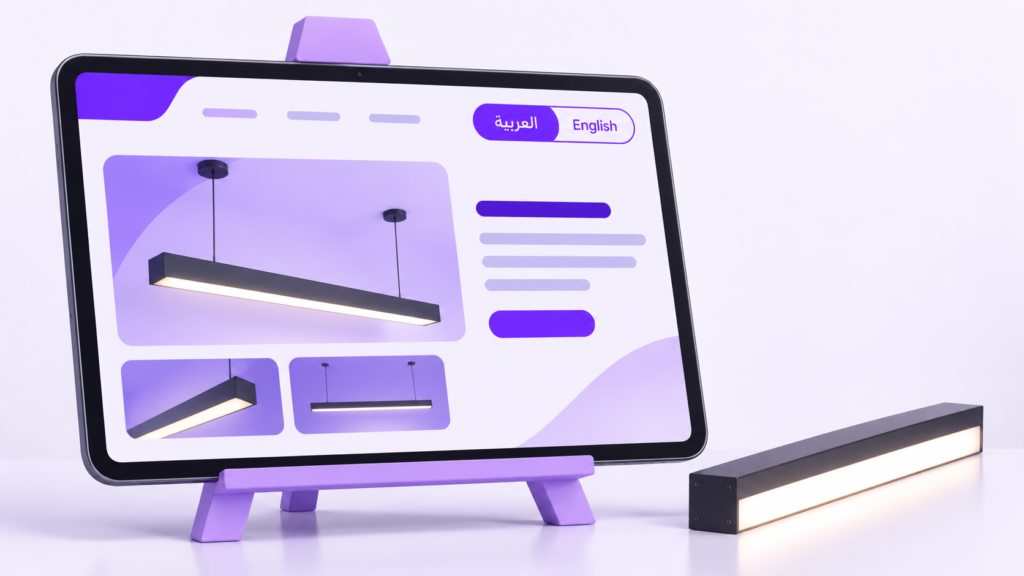
- Visible language selector. Use clear labels such as Arabic and English. Make the selector easy to find on a phone, including on pages people reach directly from search or a shared link.
- Readable page layouts. Check that Arabic pages read naturally from right to left and English pages from left to right. Look at mixed content on a phone, especially model numbers, phone numbers and measurements within Arabic copy.
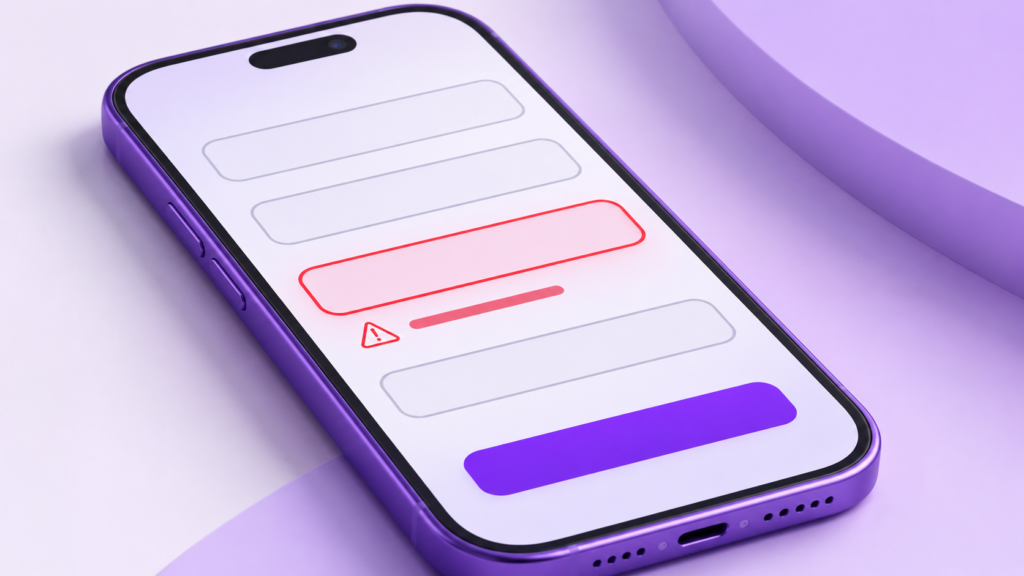
- Enquiry form labels and errors. Use clear field labels in the selected language. Leave a required field blank during testing and check whether the error tells the customer what to enter and where to continue.
- A practical publishing workflow. Assign someone to update each version and agree who checks shared details. If you’re choosing a platform, Bixeltek’s guide to choosing a content management system for a business website explains how to test routine edits. Ask your staff to update a branch’s opening hours in both languages during the demo.
Ask a representative reader for each language to start on a page a real customer would visit. Give them a task, such as checking whether they qualify for a service and submitting a test enquiry. Watch where they pause or need help. Then check the confirmation’s language and where their enquiry actually goes. For an appointment request, the customer should be able to tell whether the visit is booked or still awaiting approval. Your team should know who replies and which language to use.
If a buyer calls instead of filling out a form, check which team receives that call and whether someone can answer in that language during regular business hours.
Plan the language setup for your Saudi business website
If you’re deciding which language to launch with or how much to publish in a second language, Bixeltek can help map the pages and enquiry steps each group needs. For projects in the capital, explore Bixeltek’s website development services in Riyadh.