
Getting Leads but No Sales? Find Where Your Customers Drop Off
Getting Leads but No Sales? How to Find Where Your Customers Drop Off If you are getting leads but no sales, trace what happens between the first enquiry and the purchase decision. Check whether requests reach your team, whether they match...
- Nov 6, 2026
- 10 min read
By Asif Shaik

Getting Leads but No Sales? How to Find Where Your Customers Drop Off
If you are getting leads but no sales, trace what happens between the first enquiry and the purchase decision. Check whether requests reach your team, whether they match what you offer, and where suitable customers stop progressing.
The cause could be missed enquiries, unsuitable requests, unanswered questions, unclear quotations or a difficult final purchase step. Incomplete records can also hide sales that have already happened.
Start with the customer journey you can verify. Then choose a correction based on the evidence.
This guide helps business owners and marketing and sales teams investigate enquiries from websites, advertising, search, referrals and social media.
What Should You Count as a Sales Opportunity?
A reported lead does not always represent a completed enquiry. Clicking a phone number does not confirm that a call is connected. Opening WhatsApp does not establish that a message was sent.
Match reported activity against received forms, calls and messages before reviewing sales performance.
For this article, an opportunity means one distinct purchase request being tracked; it does not mean the request has already qualified.
If someone submits a form, calls and sends a message about the same project, link those contacts to one opportunity. If they make a genuinely separate purchase request, create another opportunity.
Use that counting unit throughout the review. Attach contact history and stage changes to the original record.
Keep these outcomes distinct:
- Qualified: The request meets your business’s suitability criteria.
- Booked: The person reserves an appointment or another agreed next step.
- Won: The customer reaches your defined purchase milestone, such as signing an agreement or making the required payment.
- Lost: The opportunity closes without a purchase, with a recorded reason where known.
- Open: A decision or assessment is still pending.
Exclude tests and spam from the sales analysis. Check invoices, contracts and payment records for purchases that have not been added to your sales records.
How Do You Find Where Customers Stop Progressing?
Choose opportunities first received during a defined period and follow those same records through the buying process. This group is your enquiry cohort.
Do not divide this month’s sales by this month’s new enquiries if some sales came from older requests.
Use stages that reflect how customers buy from your business. A quotation-based service business might track:
Enquiry received → two-way contact → qualified → quotation sent → sale
An appointment-based business may also need bookings and attendance. A business selling directly by telephone may not need a quotation stage.
For each opportunity, record its source, first enquiry date, owner, stage dates, next action and outcome. A customer relationship management system, usually called a CRM, can hold this information. A shared spreadsheet can also work for a small team.
Look for the stage where opportunities stop moving, then inspect the records behind it. A large drop does not automatically indicate failure: screening out requests your business cannot serve may be appropriate.
Compare Opportunities After the Same Amount of Time
A routine service request and a complex business purchase may have different decision periods.
Choose a follow-up window that reflects your buying cycle. Compare cohorts after the same amount of elapsed time and show how many opportunities remain open.
Use the same time zone when comparing timestamps. Keep the enquiry date, purchase date and record-update date separate. A purchase made later reflects decision timing; an earlier purchase entered into the CRM later reflects a recording delay.
Calculate Rates With Clear Denominators
Use opportunity counts from the same cohort and state the reporting cutoff.
Qualification rate = qualified opportunities ÷ opportunities with a recorded qualified or disqualified decision
Report opportunities awaiting assessment separately.
Quotation-to-sale conversion to date = won quoted opportunities ÷ all quoted opportunities in the same enquiry cohort
Show won, lost and still-open counts beside this figure.
If you want to examine only decided quotations:
Win rate among decided quotations = won quoted opportunities ÷ (won quoted opportunities + lost quoted opportunities)
This excludes pending decisions.
For example, a hypothetical cohort has 20 quoted opportunities: five won, five lost and ten open. Its quotation-to-sale conversion to date is 25%, while its win rate among decided quotations is 50%. The ten pending decisions remain important.
How Do You Check Enquiry Delivery and Ownership?
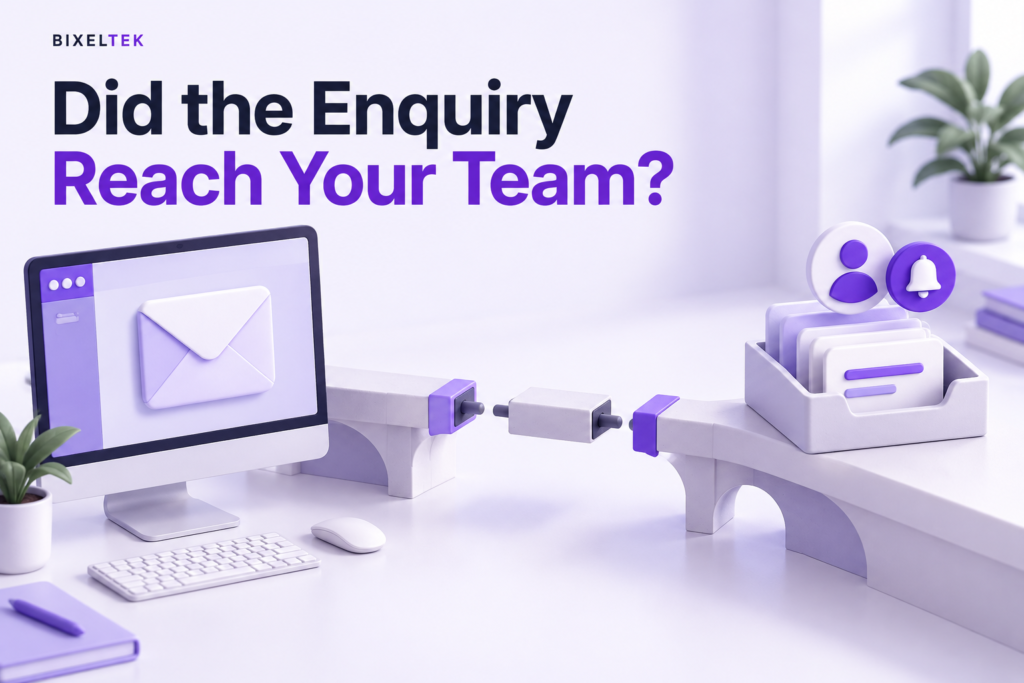
If customers submit requests but your team cannot find them, test the delivery route.
Send a clearly labelled test through each important contact method. Confirm that the website accepts it, the intended inbox or CRM receives it, the correct person is notified and someone owns the response.
Test separately where forms, branches or assignment rules differ. One successful route does not establish that every route works.
If you use Google Analytics 4, enable debug mode for your test device and inspect the relevant event in DebugView. Check whether it fires after successful submission, on a button click or more than once.
An event appearing in Analytics confirms receipt of that event under the test conditions. It does not establish that the request reached your sales team.
Where website forms and internal tools are disconnected, Bixeltek’s website and systems development services can support the integration work.
For enquiries that arrive correctly, inspect assignment history. Shared inboxes still need a named owner, a response expectation and backup coverage when the usual person is unavailable.
Why Might Enquiries Fail Your Suitability Checks?

Define qualification using requirements that matter to your business.
A commercial cleaning company might assess service location, premises type and schedule. A development agency might assess project scope, technical needs, budget compatibility and delivery expectations.
Base the decision on information the customer provides or confirms. An unanswered contact attempt leaves suitability unknown.
Compare disqualification reasons with what customers saw before enquiring. For example:
- Does an advertisement imply repairs when you only offer installations?
- Does a starting price omit important scope restrictions?
- Does the page make your service area clear?
- Could someone mistake an initial consultation for the complete service?
If a mismatch is confirmed, correct expectations where they first form. Add form questions when the answers help assess or route requests.
Compare reasons among classified opportunities and report how many remain unclassified. Otherwise, incomplete assessment can make the apparent mismatch rate misleading.
If the issue is specific to paid search, Bixeltek’s guide to improving Google Ads lead quality provides the campaign-level checks.
How Can Your Response Help Suitable Customers Take the Next Step?
An automated acknowledgement confirms receipt, but it may not answer the customer’s question. Measure the first meaningful response separately from the automatic message.
Review whether your replies address the requested service, gather necessary details and explain what happens next. Check evenings, weekends and different branches for gaps in coverage.
Keep attempted contact separate from a two-way exchange by phone, email or messaging. Several unanswered calls show activity, but do not establish that the customer received assistance.
When exchanges happen without progress, inspect the proposed next step.
Let us know if you are interested and leave the customer to work out what to do.
Would you like us to arrange a site visit so we can confirm the cleaning requirements?
explains the action and its purpose.
If the customer agrees but cannot find an available appointment, review scheduling rather than assuming they have lost interest. If they raise a concern, answer it before asking them to commit.
What Makes a Quotation Easier to Evaluate?

First, confirm that the customer received it.
Then review whether the quotation explains:
- Included work and exclusions.
- Total price, applicable taxes and payment terms.
- Delivery timing and customer responsibilities.
- Assumptions or conditions.
- How to ask questions or accept.
Investigate objections rather than treating every stalled quotation as a price problem.
A customer may have a budget limit, be comparing different scopes or need confidence in your delivery process. Relevant work examples, clear terms or applicable credentials can help answer specific concerns.
Follow-up should match the decision still outstanding. Ask when internal approval is expected or whether a scope question needs resolving. Record the next action, date and responsible person.
Respect communication preferences and requests to stop contact. Record loss reasons from confirmed information rather than assigning not interested after an unanswered call.
Where Can a Sale Stall After the Customer Agrees?
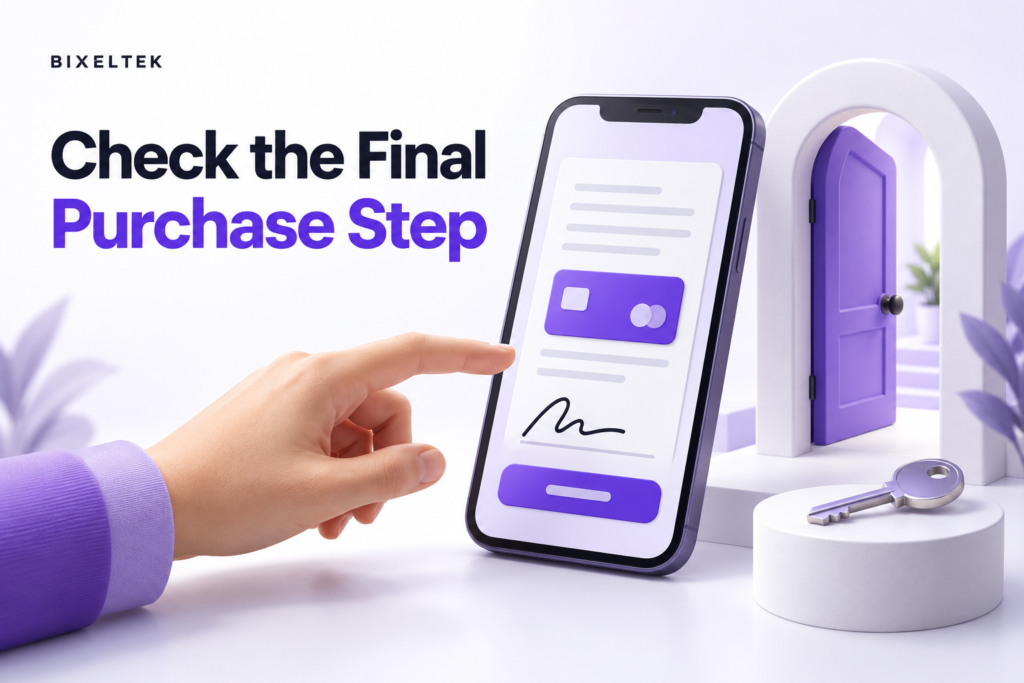
Agreement does not always mean the purchase is complete.
Test the remaining steps as a customer would. Check whether the contract can be accessed and signed, the payment link works, the agreed payment method is available and the promised delivery or appointment slot can still be provided.
Compare the final requirements with what was discussed earlier. An unexpected deposit, additional charge or changed start date may explain hesitation.
Repair the confirmed obstacle and contact the affected customer appropriately. Avoid treating a failed payment or inaccessible contract as evidence of poor lead quality.
A Hypothetical Example: Requests Stalling Before Quotation
A commercial cleaning company receives suitable website enquiries but sends few quotations.
The owner checks records from a cohort old enough to have completed the normal estimating process. Contact notes show that customers requested site visits, but the estimator’s calendar contains no corresponding bookings.
The enquiry handler says the requests were passed on verbally. No estimator or next action appears in the records.
The company introduces a named estimator, a site-visit booking step and an alert for opportunities awaiting assignment.
A labelled test request is followed through receipt, assignment and booking. Subsequent live records are checked for completed visits and delivered quotations.
The example shows how a missed internal handover can prevent suitable enquiries from reaching quotation.
How Do You Turn the Diagnosis Into a Verified Fix?
Use a short action record to turn the investigation into a manageable change
| Action record | What to document |
|---|---|
| Confirmed issue | The failure supported by the records, with unknowns kept separate. |
| Correction | The specific change intended to address it. |
| Responsibility | A named owner and completion date. |
| Process check | Evidence that the corrected step works. |
| Outcome review | A later date to assess progression and sales after sufficient buying time. |
First confirm that the corrected process works. Then assess whether comparable opportunities progress further.
Improvement after a change does not, by itself, prove that the change caused additional sales. Customer mix, demand, pricing and availability may also affect outcomes.
When the cause remains unclear across acquisition, landing pages and measurement, Bixeltek’s digital marketing and growth services can support a coordinated review.
If you cannot explain where suitable customers stop progressing, Bixeltek can review the available evidence and help identify the next area to investigate.